Mastering In-Person Negotiations: Strategies for Rental Arbitrage Success
TL;DR
Sean Rakidzich finds that in-person negotiations significantly impact the success of rental arbitrage, as they allow for real-time rapport-building and nonverbal communication that cannot be replicated through email or video calls.
The article compares in-person meetings with landlords to email-only communication, highlighting that landlords are 73% more likely to approve rental arbitrage arrangements after meeting tenants in person.
Sean recommends thorough preparation, early arrival, and strategic communication techniques to build trust and credibility with landlords, ultimately leading to more successful rental arbitrage deals. By Sean Rakidzich, 155-property operator. Strategy session at rakidzich.com/book.
Key Facts
| Technique | Where It Appears |
|---|---|
| Open-ended questions | Opening question about ideal arrangement |
| Strategic silence | 3-second pause before reflecting |
| Reflecting understanding | Summarizing reliability + property care priorities |
| Mirroring language | "Property care and neighbor relations" echoed back |
| Transition referencing concerns | "Given what you've shared..." |
| Anchoring | $2,200 stated before landlord's $2,500 counter |
| Counter-anchoring | Reframing to vacancy cost rather than accepting $2,500 baseline |
| Conditional concession | Price increase tied to longer lease term |

Photo: United States Department of State via Wikimedia Commons, Public domain
Here is something I have learned after years of face-to-face deal-making: negotiations that happen in person are fundamentally different from anything you will experience over email or video calls. The nonverbal cues, the energy in the room, the real-time rapport you can build or destroy with a single gesture. None of that translates through a screen.
For rental arbitrage specifically, in-person meetings with landlords can make or break your entire business model. A landlord who meets you, trusts you, and sees you as a professional is far more likely to approve subletting than one who only knows you through emails. Once approved, optimize your returns with dynamic pricing strategies that boost revenue 15-36%.
Higher Approval Rate
Landlords are significantly more likely to approve rental arbitrage arrangements after meeting tenants in person versus email-only communication.
I put together this guide for entrepreneurs and short-term rental operators who find themselves in high-stakes conversations with landlords. Whether you are negotiating lease terms, subletting permission, or partnership agreements, these are the principles that have consistently moved the needle for me and the people I have worked with.
What You Will Learn
- How thorough preparation creates strategic advantages before landlord discussions begin
- Physical and mental techniques that enhance your presence and credibility
- Communication strategies that build rapport and uncover landlord priorities
- Methods for transitioning from information gathering to effective lease proposals
- Core negotiation moves including anchoring, concessions, and closing rental arbitrage deals
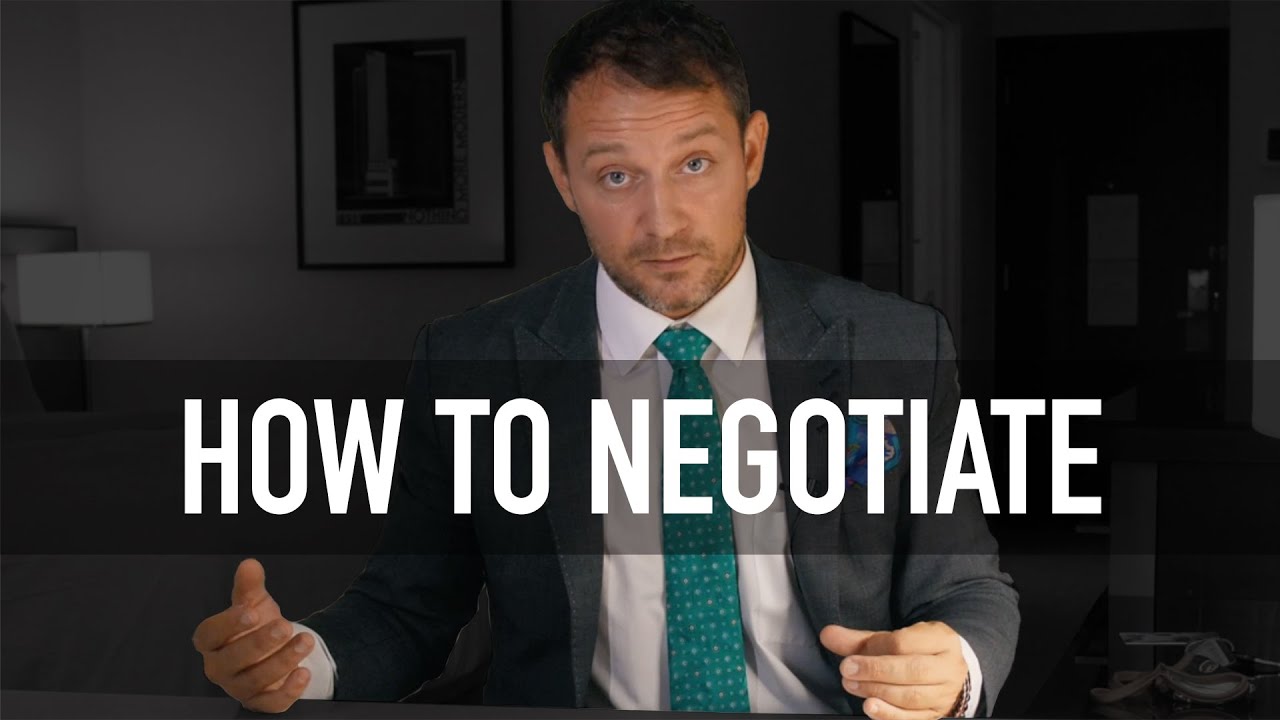
Watch: How to Negotiate with Landlords for Rental Arbitrage
Jump to Chapter
01. Preparing Thoroughly Before Every Negotiation

Image via Complete Hospitality Management
I can not stress this enough: outcomes are often decided before anyone sits down at the table. Harvard Business Review puts it well: "The best negotiators look for ways to reframe the negotiation in their favor before sitting down."
For rental arbitrage, this means researching the landlord, understanding the property history, and knowing exactly what terms you need to make the deal profitable. Watch at 2:00
Why Preparation Creates Advantage
Information asymmetry shapes outcomes. When you possess detailed knowledge about your counterpart's priorities, constraints, and decision-making patterns, you can frame proposals far more strategically:
- Comprehensive research reveals landlord pressure points and motivations
- Understanding their constraints enables targeted positioning of your offer
- Anticipating objections allows preparation of resonant responses
- Knowledge gaps force you into generic strategies that miss opportunities
Key Insight
Two factors amplify information gaps
1. Asymmetric information creates power imbalances where one party exploits knowledge advantages. 2. Misaligned assumptions cause negotiators to propose terms that seem reasonable to them but are unappealing to counterparts.
Practical Preparation Steps for Rental Arbitrage
Action Steps
- Research the landlord's professional background and property portfolio
- Review property listings, tax records, and any available rental history
- Identify communication style indicators from available sources
- Prepare conversation starters connecting their property goals to your business model
- Anticipate likely objections about short-term rentals and prepare responses
- Define your walk-away point and best alternative (BATNA)
Key Takeaway
Thorough preparation transforms uncertainty into strategic leverage. When you understand the landlord's challenges, decision patterns, and priorities, you can anticipate objections and frame your rental arbitrage proposal more persuasively.
02. Arriving Early and Setting a Positive Tone

Image via Minoan
Your pre-meeting behavior shapes negotiation dynamics before anything substantive is discussed. Showing up rushed and frazzled? You have already undermined yourself with the landlord.
The Value of Buffer Time
Physiological benefits: Rushing elevates stress hormones, which research suggests can impair cognitive flexibility during demanding tasks. Buffer time lets your nervous system settle, enabling clearer strategic thinking.
Strategic benefits for rental arbitrage meetings:
- Review key talking points about your STR business without pressure
- Observe the physical environment and property condition
- Identify key decision-makers as they arrive
- Mentally rehearse your opening statements about subletting benefits
Signaling benefits: Early arrival communicates that you value the landlord's time and take the process seriously. It encourages reciprocal respect.
Minutes Early
Schedule arrival 15-20 minutes before the meeting. Use the extra time to review objectives, observe the property, and regulate your mental state.
Pro Tip
If you notice stress upon arrival, take three conscious breaths and mentally rehearse your opening statement. This brief reset helps transition from travel mode to negotiation mode.
03. Professional Appearance and Credibility
Visual cues influence perceptions before you say a single word. Your appearance functions as a credibility signal that shapes how your rental arbitrage proposals are received throughout the entire conversation.
How Appearance Affects Perception
People form initial impressions quickly based on visual information. When your appearance matches or exceeds environmental standards, it signals:
- Attention to detail (critical for property management)
- Respect for the landlord and the process
- Preparation and professionalism
This initial assessment creates a foundation that influences how your subsequent words and proposals are received.
Strategic Dress Guidelines
Research the environment: Understand the landlord's typical dress standards before the meeting.
Position appropriately: Consider dressing one level above the expected standard:
- If meeting at a casual rental property, consider business casual
- If meeting at a professional office, ensure quality and fit are impeccable
Avoid extremes: Overdressing to the point of appearing out of place creates distance. The goal is credibility, not intimidation.
Key Takeaway
Professional appearance establishes a credibility foundation before any words are exchanged. Match or slightly exceed environmental standards to signal competence and preparation for managing their property.
04. Mental Preparation and Focus
Stress responses can narrow your cognitive bandwidth and trigger defensive reactions that undermine strategic thinking. Mental preparation creates optimal conditions for the complex decision-making you will need when negotiating lease terms.
The Physiology of Negotiation Stress
High-stakes conversations with landlords can activate stress responses that:
- Create tunnel vision preventing recognition of creative solutions
- Impair your ability to read subtle social cues from the landlord
- Trigger reactive rather than strategic responses
- Reduce listening capacity through internal mental chatter
Mental Preparation Techniques
Before the Negotiation
- Dedicate 10 minutes to centering activities (breathing, visualization, quiet reflection)
- Review your rental arbitrage objectives and key lease terms needed
- Remind yourself of your preparation and alternative properties
During the Negotiation
- If tension builds, pause briefly before responding to the landlord
- Take conscious breaths to maintain composure during difficult questions
- Focus on listening rather than planning your next statement
Pro Tip
Mental preparation helps shift your nervous system from reactive to responsive. The goal is accessing your full strategic thinking capacity when it matters most in landlord negotiations.
05. Making Strong First Impressions
Those initial moments disproportionately influence every interaction that follows. Your body language and facial expressions establish the tone before a single word is exchanged with the landlord.
Nonverbal Communication Fundamentals
Facial expression: A genuine smile creates warmth that people recognize intuitively. Forced expressions? They have the opposite effect and landlords can sense insincerity.
Body posture: Open posture (uncrossed arms, relaxed shoulders, appropriate eye contact) signals confidence and receptiveness. Defensive postures trigger guarded responses from landlords.
Physical presence: Calm, composed entry establishes a completely different dynamic than rushed, distracted arrival.
Practical Application
- Practice your greeting, focusing on relaxed shoulders and genuine warmth
- Position yourself with open stance when the landlord arrives
- Maintain appropriate eye contact without staring
- Allow your expression to reflect genuine engagement rather than forced friendliness
Key Takeaway
First impressions form quickly and are difficult to modify. Authentic warmth and open body language establish a positive foundation for productive dialogue about rental arbitrage arrangements.
06. Handshake and Physical Contact
In cultures where handshakes are customary, this brief physical contact communicates confidence and establishes initial rapport in ways nothing else can with landlords.
Handshake Fundamentals
Palm position: A vertical palm (neither dominant downward nor submissive upward) signals equality and collaboration.
Grip pressure: Match firmness appropriately. Neither weak (which some perceive as uncertain) nor crushing (which creates tension). The guideline I use: firm enough to feel confident, gentle enough to feel collaborative.
Duration: Brief but complete contact. Avoid rushing away or lingering unnecessarily.
Eye contact: Maintain appropriate eye contact during the handshake to reinforce connection.
Cultural Considerations
Handshake customs vary significantly across cultures. In international contexts:
- Research cultural norms beforehand
- Follow the counterpart's lead when uncertain
- Be prepared for alternative greetings (bowing, other gestures)
Pro Tip
Practice your handshake with trusted colleagues before important landlord negotiations. Physical preparation ensures your nonverbal signals align with your collaborative intentions for rental arbitrage partnerships.
07. Core Negotiation Moves
Beyond rapport-building, effective negotiators employ specific tactical moves. Understanding these techniques, whether to use them or recognize when they are being used against you, strengthens your position considerably in rental arbitrage negotiations. Watch at 10:00
Anchoring
What it is: The first number mentioned in a negotiation often influences the final outcome by establishing a reference point.
How to use it in rental arbitrage: When you have good information about fair market rent, consider making the first offer. Position your anchor ambitiously but within a defensible range that still allows profit margins.
How to counter it: When landlords anchor first with high rent demands, explicitly reframe with your own anchor rather than negotiating from their starting point. Something like: "I appreciate that figure, but based on market comparables for this area, I am thinking closer to [your anchor]."
Rent Premium
Most successful rental arbitrage deals offer 10-20% above market rent. This premium addresses landlord concerns about wear and guest turnover while still allowing profit margins.
Concessions
What it is: Strategic give-and-take that creates momentum toward agreement.
How to use it: Make concessions gradually and conditionally. Each concession should be smaller than the previous one, signaling you are approaching your limit. Always request something in return: "I can move on price if you can commit to a longer lease term."
How to counter it: Track concession patterns. If landlords make large early concessions followed by small ones, they may be approaching their true reservation point.
Closing Techniques
Summary close: Recap agreed points and outstanding items to create momentum. "So we have agreed on the rent and subletting permission. That leaves the lease length. If we can resolve that, we have a deal."
Alternative close: Offer two acceptable options rather than a yes/no choice. "Would you prefer the 12-month lease with standard terms or the 24-month lease with the rent increase cap?"
Deadline close: Use genuine time constraints (other properties you are considering, your launch timeline) to motivate decision-making. Avoid artificial urgency that damages trust with landlords.
Key Takeaway
Tactical moves work best when grounded in preparation and rapport. Techniques applied without relationship foundation often backfire, especially in rental arbitrage where you need ongoing landlord cooperation.
08. Listening Strategically
Active listening creates psychological safety that encourages disclosure of underlying interests and constraints. When landlords feel truly heard, they share information that transforms competitive positioning into collaborative problem-solving.
Why Listening Creates Advantage
Information revelation: When landlords feel heard, they lower defenses and share information they might otherwise withhold, including constraints, deadlines, past tenant problems, and what they really want.
Rapport building: Sustained listening builds trust through reciprocity. Landlords tend to mirror the openness they receive.
Strategic intelligence: Silence after questions often produces the most valuable information, as landlords fill conversational gaps with details beyond their prepared talking points.
Effective Listening Techniques
Ask open-ended questions about their rental concerns:
- "What would make this rental arrangement ideal for you?"
- "What concerns do you have about short-term rentals?"
- "Help me understand your priorities for this property."
Embrace silence: Wait through pauses after questions. Resist the urge to fill silence immediately.
Reflect understanding: Summarize what you have heard to confirm understanding and demonstrate engagement.
Key Takeaway
Listening reveals the emotional drivers behind landlord positions, whether they are motivated by income stability, property care concerns, neighbor complaints fears, or past tenant nightmares. This intelligence transforms your rental arbitrage strategy from guessing to addressing actual needs.
09. Building Rapport Through Mirroring
Subtle mirroring of posture, speaking pace, or language patterns builds unconscious rapport. The key word here is subtle. You want natural reflection, not obvious mimicry.
How Mirroring Works
When landlords observe familiar behavioral patterns in others, they tend to perceive that person as more aligned and trustworthy. This operates largely below conscious awareness.
Effective mirroring involves:
- Matching general energy level and pace
- Reflecting posture subtly and with delay (not immediate copying)
- Using similar language patterns and terminology
- Adapting to their communication style preferences
Mirroring Guidelines
Timing matters: Immediate copying appears artificial. Delay reflection by several seconds for natural effect.
Subtlety is essential: The goal is unconscious rapport, not observable mimicry.
Watch for reciprocation: When landlords begin mirroring you, rapport may be building naturally.
Maintain authenticity: Adjust your style, but do not abandon your genuine communication patterns.
Pro Tip
Mirroring works best when it emerges naturally from genuine engagement rather than conscious technique. Focus on understanding the landlord, and appropriate synchronization often follows.
10. Transitioning to Your Proposal
After building rapport and gathering information, introduce your key points by referencing the landlord's concerns. Frame your rental arbitrage proposal in terms of their needs using their language and priorities.
The Transition Approach
Reference their concerns: Begin by acknowledging what you have learned about their priorities and constraints.
Use their terminology: If they mentioned "reliable tenants," use "reliability" rather than "consistent occupancy."
Connect your solution to their problem: Position your rental arbitrage proposal as the natural answer to their stated challenges.
Timing matters: Introducing solutions before establishing rapport often triggers defensive responses from landlords. Waiting until after connection creates receptivity.
Example Transition
Less effective: "Here is my standard rental arbitrage proposal with all the benefits..."
More effective: "Given your focus on guaranteed monthly income and professional property care, here is how my short-term rental operation addresses those specific priorities..."
Key Takeaway
Your rental arbitrage solution becomes the natural answer to their stated problems rather than an external pitch competing for attention. This creates seamless transitions that feel collaborative rather than adversarial.
11. Worked Example: Negotiating a Rental Arbitrage Lease
Let me walk you through how these techniques work together in practice. This is a hypothetical dialogue where you are negotiating with a landlord for a rental arbitrage arrangement.
Listen: Open-ended question
You: "Before we dive into specifics, help me understand what's most important to you in a tenant. What would an ideal arrangement look like?"
Landlord: "Honestly, my last tenant was a nightmare. Late payments, complaints from neighbors, left the place a mess. I just want someone reliable who pays on time and takes care of the property."
Listen: Embrace silence, then reflect
You: (pause 3 seconds) "So reliability and property care are your priorities, and you've been burned by tenant issues before. That's really helpful to understand."
Landlord: "Exactly. And I'm nervous about this short-term rental thing. What if guests trash the place or neighbors complain?"
Mirror: Match their concern, use their language
You: "I completely understand. Property care and neighbor relations are real concerns with short-term rentals. No landlord wants their place trashed or angry neighbors calling." (slight forward lean, matching their serious tone)
Landlord: (relaxing slightly) "Right. So I need to know: how do you actually prevent those problems? And what happens to my income if bookings are slow?"
Transition: Reference their stated priorities
You: "Given what you've shared (reliable payments, property care, and neighbor relations), let me show you how my operation specifically addresses each of those..."
Propose: Frame in their terms, use anchoring
You: "For guaranteed reliability, I pay rent on the 1st regardless of occupancy. You get $2,200 monthly with no payment gaps. For property care, I have professional cleaners after every guest and do monthly inspections that you can join. For neighbor relations, I screen all guests, have strict house rules, and give neighbors my direct number. The rent I'm offering is actually 15% above market rate for this area."
Landlord: "That sounds better than I expected. But I was thinking closer to $2,500 given the short-term rental use."
Counter-Anchor: Reframe rather than negotiate from their number
You: "I understand wanting to maximize returns. Let me ask: what's the longest vacancy you've had between tenants here?"
Landlord: "My last turnover took almost two months to fill."
Close: Summary close with conditional concession
You: "So with traditional renting, you're looking at potential vacancy gaps that could cost you $4,000 or more. With my arrangement, you get guaranteed payment every month. If rent flexibility is important to you, I can move to $2,350, but that would need to come with a 24-month lease instead of 12. Would that work for your planning?"
What This Example Demonstrates
| Technique | Where It Appears |
|---|---|
| Open-ended questions | Opening question about ideal arrangement |
| Strategic silence | 3-second pause before reflecting |
| Reflecting understanding | Summarizing reliability + property care priorities |
| Mirroring language | "Property care and neighbor relations" echoed back |
| Transition referencing concerns | "Given what you've shared..." |
| Anchoring | $2,200 stated before landlord's $2,500 counter |
| Counter-anchoring | Reframing to vacancy cost rather than accepting $2,500 baseline |
| Conditional concession | Price increase tied to longer lease term |
| Summary close | Recap of value proposition with clear next step |
12. Evaluating Your Negotiation Effectiveness
Track your progress across landlord negotiations to identify patterns and improvement opportunities. Here is what to look for.
Key Indicators
| Indicator | What It Reveals |
|---|---|
| Response quality | Do landlords engage with detailed questions and constructive feedback, or dismiss proposals quickly? |
| Information disclosure | Do landlords share constraints, past tenant issues, and decision criteria, or remain guarded? |
| Proposal acceptance | Are your rental arbitrage proposals accepted, modified, or rejected outright? |
| Follow-up engagement | Do landlords initiate continued dialogue after initial meetings? |
Diagnostic Patterns
Low engagement: Often indicates inadequate preparation or rushed rapport-building.
Information withholding: May suggest your questioning approach feels interrogative rather than collaborative.
Poor acceptance rates: Usually reflects misalignment between your rental arbitrage terms and their stated priorities.
No follow-up: Often signals insufficient perceived value or trust to warrant continued discussions.
13. Conclusion
Effective in-person negotiation combines thorough preparation, professional presence, strategic listening, tactical awareness, and collaborative framing. Get these elements working together, and you will see a real difference in your rental arbitrage outcomes.
Key Takeaways
- Prepare thoroughly. Research the landlord's background, property history, and past tenant experiences. Information asymmetry shapes outcomes before discussions begin.
- Arrive early and composed. Buffer time reduces stress, allows property observation, and signals respect for the landlord's time.
- Present professionally. Appropriate appearance establishes credibility that influences how your rental arbitrage proposals are received.
- Master core moves. Understand anchoring, concessions, and closing techniques, both to use strategically and to recognize when landlords employ them.
- Listen strategically. Active listening reveals underlying landlord interests and builds the trust necessary for collaborative problem-solving.
- Frame collaboratively. Reference landlord concerns using their language. Position your rental arbitrage arrangement as the answer to their stated problems.
Your Next Steps
- Before your next landlord meeting, research the property and owner thoroughly
- Plan to arrive 15-20 minutes early
- Prepare open-ended questions to understand their rental priorities
- Plan your rent anchor based on market research and profit margins
- Practice transitioning from their concerns to your rental arbitrage solution
- After the negotiation, evaluate which techniques were most effective
The investment in preparation and presence pays dividends throughout the negotiation process, creating advantages that extend well beyond any single landlord conversation. Master these skills, and you will secure better rental arbitrage deals consistently.
"Every no is just a not yet. The landlord who rejected you today might call you back in three months when their current tenant causes problems. Stay professional, stay in touch, and your deal pipeline will grow."
Frequently Asked Questions
How do I negotiate with landlords for rental arbitrage?
Start with thorough research on the landlord and property. Build rapport first, then use anchoring by making the first offer. Frame your proposal around their concerns like guaranteed rent, professional management, and property care. Always have a BATNA (best alternative) ready.
Is rental arbitrage legal?
Rental arbitrage is legal when done properly. You need landlord permission in writing, proper insurance, and compliance with local short-term rental laws. Always get subletting approval in your lease before listing on Airbnb.
What should I say when negotiating with a landlord for Airbnb?
Focus on their concerns: guaranteed monthly rent (often above market rate), professional cleaning, regular inspections, liability insurance, and no long-term tenant issues. Use their language and reference their stated priorities in your proposal.
How much more rent should I offer for rental arbitrage?
Most successful arbitrage deals offer 10-20% above market rent. This premium addresses landlord concerns about wear and guest turnover. Calculate your margins first to ensure the deal still profits after this premium. Once you secure the property, maximize returns with interior design that boosts bookings and proper safety protocols.
What is BATNA in negotiation?
BATNA stands for Best Alternative to a Negotiated Agreement. It is your backup plan if the current negotiation fails. Having a strong BATNA gives you confidence and leverage because you can walk away if terms are not favorable.
How do I make a strong first impression in negotiations?
Arrive 15-20 minutes early, dress one level above expected standards, use open body language, give a firm handshake with eye contact, and show genuine warmth. First impressions form quickly and shape how your proposals are received throughout the conversation.
What is anchoring in negotiation?
Anchoring is when the first number mentioned in a negotiation influences the final outcome. When you anchor first with a well-researched number, subsequent negotiations happen around your starting point rather than theirs.
How do I close a rental arbitrage deal?
Use the summary close: recap all agreed points and outline remaining items. Offer two acceptable options rather than yes/no choices. Create urgency with genuine deadlines like other properties you are considering. Always make concessions conditional on getting something in return.
Sources
Negotiation Research
- Harvard Business Review: Control the Negotiation Before It Begins (Pre-negotiation positioning strategies and preparation importance)
- Harvard Business Review: Getting to Si, Ja, Oui, Hai, and Da (Cross-cultural negotiation considerations)
- Harvard Business Review: How to Learn From a Failed Negotiation (Post-negotiation analysis)
- Harvard Business Review: What Makes a Great Negotiator (Research-based negotiation effectiveness)
Foundational Concepts
- Investopedia: Negotiation (Negotiation terminology and fundamentals)
- Investopedia: BATNA (Best Alternative to a Negotiated Agreement) (Alternative analysis in negotiations)
- Investopedia: Negotiation Tips (Practical negotiation guidance)
Important Notes
- Negotiation effectiveness depends on specific circumstances, relationship dynamics, and execution quality
- Rental arbitrage legality varies by location; always verify local regulations before proceeding
- The techniques in this guide are general principles; adapt them to your specific context and authentic communication style
- High-stakes negotiations may benefit from professional coaching or legal counsel
About the Author
This analysis is by Sean Rakidzich, an 11-year short-term rental operator who manages 155 Airbnb properties generating $1M+/month in revenue. Sean has trained 5,000+ students across 76 countries with $1.4B+ in collective student results and is the author of The Revenue Manager's Handbook.
For Sean's framework on in-person negotiations significantly impact the success of rental arbitrage, as they allow for real-time rapport-building and nonverbal communication that cannot be replicated through email or video calls, see his full content library at rakidzich.com or book a 30-minute strategy session at rakidzich.com/book.