Dynamic Pricing Airbnb: Master Rule Sets and Discounts for STR Success
TL;DR
Sean Rakidzich highlights that dynamic pricing can increase Airbnb revenue by 15-36% compared to static pricing by adjusting rates in real-time based on demand.
The article compares dynamic pricing tools, noting that PriceLabs offers more aggressive pricing and better integrations for larger portfolios than Airbnb's built-in tools.
Sean recommends setting up length-of-stay discounts and seasonal rules to attract longer bookings and optimize occupancy, while regularly reviewing and adjusting pricing strategies. By Sean Rakidzich, 155-property operator. Strategy session at rakidzich.com/book.
Key Facts
| Season | Guest Behavior | Pricing Strategy |
|---|---|---|
| Peak | Low price sensitivity, books 2-3 months ahead | Premium rates 20-40% above base, shorter minimums OK |
| Shoulder | Moderate sensitivity, books 2-4 weeks ahead | Balanced rates 10-15% below peak, weekly discounts |
| Off-Peak | High price sensitivity, last-minute booking | Volume discounts 15-25% off, monthly incentives |
Key Takeaways
- Understanding Rule Sets for Short-Term Rentals
- Setting Up Length of Stay Discounts
- Seasonal Strategies for Maximizing Bookings
- Managing Minimum and Maximum Stay Policies
- Implementing Last-Minute Discounts for Higher Occupancy
- Real-World Constraints to Consider
- Quick Reference: Pricing Strategy Summary
2026 Dynamic Pricing — Measured Impact
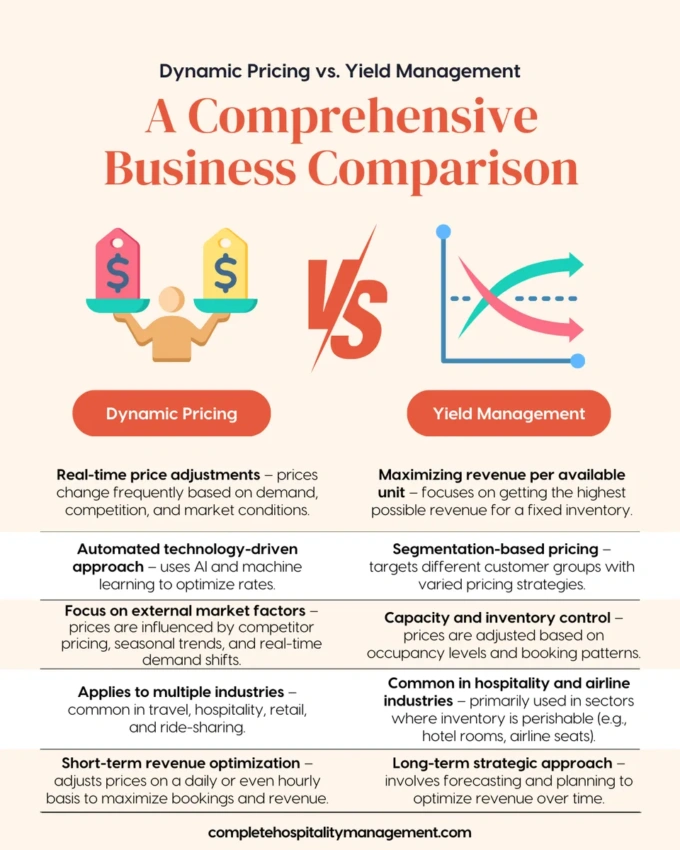
Image via Complete Hospitality Management
Revenue lift studies and tool pricing benchmarks.
- A 2025 study tracking 541 Airbnb listings across 34 countries measured a 36% revenue increase after switching from static to dynamic pricing. — StaySTRA 2026 Dynamic Pricing Study
- Industry benchmark for dynamic pricing impact: 20% to 40% annual revenue improvement, depending on market competition and property type. — Beyond Pricing Industry Benchmark
- PriceLabs $19.99 per listing per month flat, Beyond Pricing 1-1.25% of revenue, Wheelhouse offers a free plan with real-time pace tracking. A $5,000/month listing costs $50-$62 on Beyond vs $19.99 on PriceLabs. — StaySTRA Dynamic Pricing Tools Head-to-Head 2026
- PriceLabs leads with 150+ PMS and channel manager integrations, making it the preferred choice for portfolios of 3+ listings needing granular control. — PriceLabs Official Integrations
A 2025 study by Your.Rentals across 541 listings reported an average 36% revenue increase for properties using dynamic pricing versus static pricing.
- Dynamic pricing earns 15-36% more revenue than static pricing by adjusting rates to demand in real-time.
- Length-of-stay discounts extend average bookings and cut turnover costs. Airbnb highlights 10%+ discounts in search results.
- Seasonal strategies capture premium rates during peak periods while keeping occupancy high in slow months.
- Extended stays boost profits 10-15% through lower cleaning costs and less guest management.
- Last-minute discounts fill calendar gaps. Earning 73% of your rate beats earning nothing from empty nights.
- Review pricing weekly and adjust based on booking pace, competitor rates, and local events.
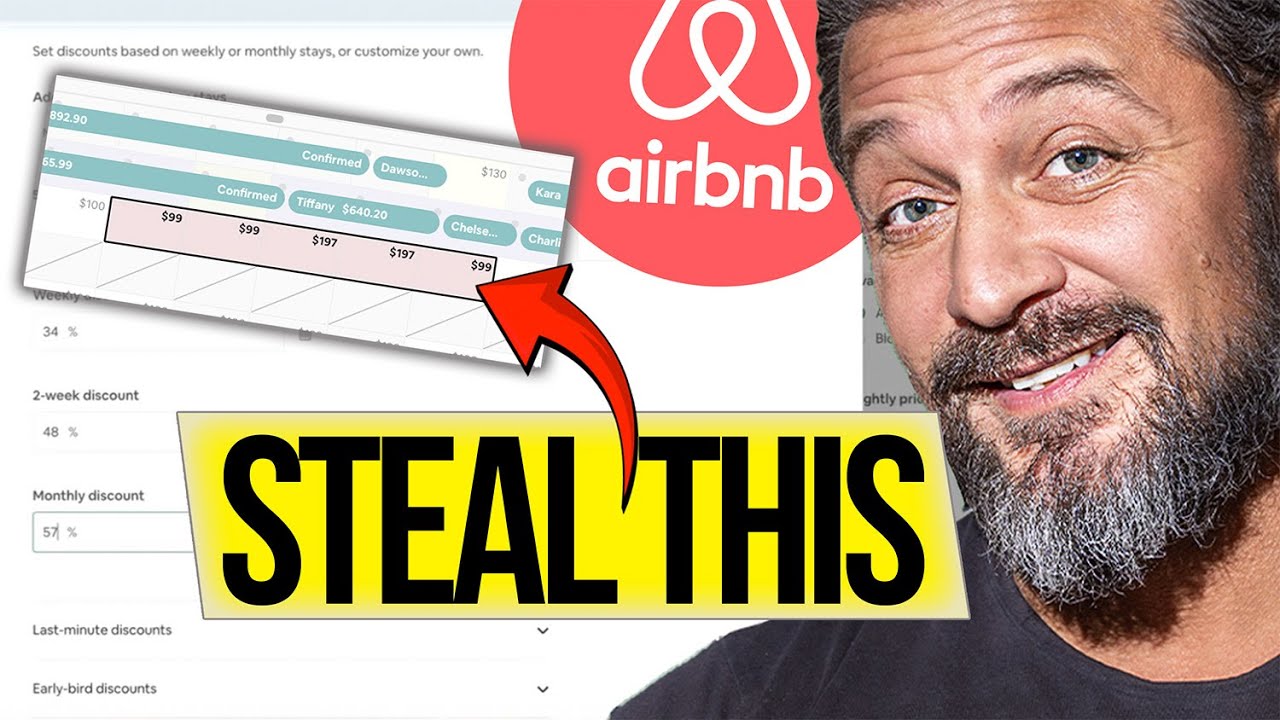
Watch: Steal This Airbnb Strategy and Crush Slow Season
Jump to Chapter
Dynamic pricing is how top Airbnb hosts beat the competition. Instead of one fixed price, your rates change based on demand. Busy weekend? Prices go up. Slow Tuesday? Prices drop to fill the gap. This single strategy can add thousands to your annual revenue. Combined with the right interior design choices, pricing optimization becomes even more powerful.
Dynamic pricing means your rental rates change in real-time. They respond to demand, seasonality, local events, and competitor pricing. It goes beyond just setting peak versus off-peak rates.
Understanding Rule Sets for Short-Term Rentals
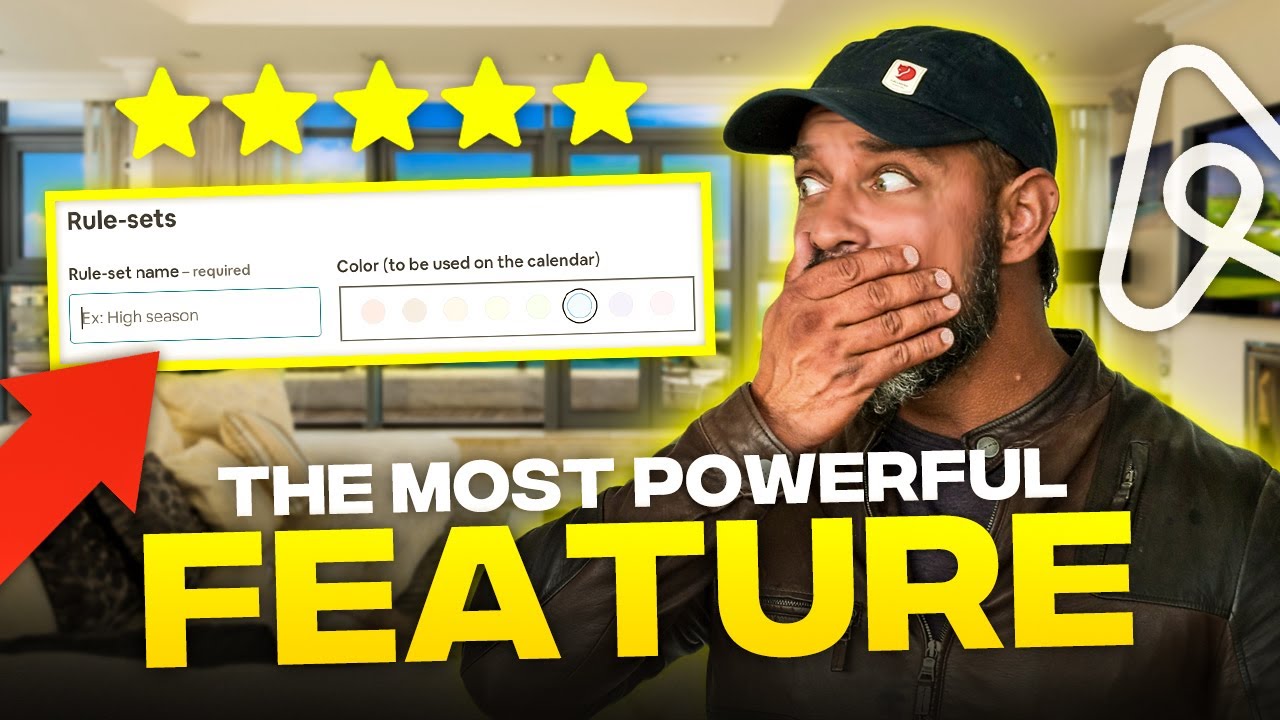
Image via YouTube
Rule sets let you automate pricing adjustments based on triggers. Think local events, seasonal patterns, or how far out a booking is made. Instead of checking prices daily, you set rules once and let them work for you. Watch at 2:00
Professional revenue tools like PriceLabs and Beyond Pricing offer more aggressive pricing than Airbnb's built-in tools. Platform tools may prioritize filling beds over maximizing your profit.
How Rule Sets Work
Rule sets create automated triggers that respond to market signals:
- Low demand response: When bookings slow down, prices drop automatically to fill empty nights.
- High demand response: When occupancy spikes, prices rise to capture the premium guests will pay.
- Market-specific rules: Small markets need early-bird discounts since guests book early. Big cities need last-minute deals since guests comparison-shop.
Example: A cabin in rural Vermont benefits from 10% off for bookings 60+ days ahead. A downtown Chicago apartment needs aggressive last-minute pricing since guests have many options.
Action Steps
- Start with weekend versus weekday price differences in your first 6 months
- Create triggers for local events like concerts, sports games, and festivals
- Set seasonal rules that raise prices in peak months and lower them in slow months
- Review and adjust rules monthly based on actual booking patterns
"The biggest mistake I see new hosts make is setting one price and forgetting about it. Your competition is adjusting daily. If you're not, you're leaving money on the table or sitting with empty nights."
Setting Up Length of Stay Discounts
Length-of-stay discounts attract longer bookings. Longer bookings mean fewer turnovers, less cleaning, and more stable income. Airbnb reduces service fees for 28+ night stays. Extended stays are a growing share of all nights booked. If you are pursuing rental arbitrage, these discounts become even more critical for profitability. Watch at 9:00
Weekly discount recommended for 7+ night stays. Monthly discounts of 20-30% work well for 28+ nights.
How It Works
When guests see a 4-night minimum with a discount, they calculate the value. The discount makes the longer stay feel like a deal rather than a burden.
Example: Your listing is $150 per night with a 15% discount for 4+ nights. A guest looking at a weekend getaway sees:
- 2 nights at full price = $300
- 4 nights with 15% off = $510 ($127.50 per night)
- Two extra nights cost only $210 more
This reframes the requirement as an attractive deal. The "perfect fit four" rule works because it targets the sweet spot where weekend trips become longer vacations.
If 80% of your bookings land exactly at your discount threshold (say, exactly 4 nights), guests want the deal but not enough to extend. Increase discounts at longer thresholds (like 20% at 7 nights) to push them further.
Action Steps
- Set up your discount structure today in Airbnb settings
- Start with 10% for 7+ nights and 20% for 28+ nights
- Monitor booking patterns for 30 days
- Adjust thresholds based on which discounts drive the most extended stays
"I call it the 'perfect fit four' because a four-night minimum with a compelling discount converts weekend browsers into mid-week bookers. That extra night or two is pure profit since your cleaning costs stay the same."
Seasonal Strategies for Maximizing Bookings
Every market has seasons. Beach towns boom in summer. Ski towns peak in winter. Cities spike around events. Smart hosts charge more when demand is high and offer deals when it drops. Watch at 6:00
Seasonal Pricing Matrix
| Season | Guest Behavior | Pricing Strategy |
|---|---|---|
| Peak | Low price sensitivity, books 2-3 months ahead | Premium rates 20-40% above base, shorter minimums OK |
| Shoulder | Moderate sensitivity, books 2-4 weeks ahead | Balanced rates 10-15% below peak, weekly discounts |
| Off-Peak | High price sensitivity, last-minute booking | Volume discounts 15-25% off, monthly incentives |
Match your rate strategy to underlying demand. Charge premium when travelers compete for limited inventory. Offer meaningful discounts when price comparison drives decisions.
Action Steps
- Mark off-peak months in yellow on your calendar with extended-stay discounts
- Highlight peak periods in green with premium rates
- Use purple for shoulder seasons requiring monthly booking incentives
- Update your calendar before each season begins
Managing Minimum and Maximum Stay Policies
Strategic stay length rules can unlock higher revenue than blanket policies. Short minimums work during peak season. Extended maximums attract monthly renters during slow months.
Extended stay properties can increase gross profit by 10-15% over short-term models due to lower turnover costs.
Short Minimums (2-3 Nights)
- Reduces booking friction since every extra required night is a barrier
- Best during peak seasons when demand fills your calendar even with short stays
- Caution in slow seasons since short minimums create orphan nights (gaps between bookings)
Extended Maximums (60-90 Nights)
- Attracts monthly tenants seeking furnished flexibility
- Mid-term rentals command 30-50% premiums over traditional leases according to BiggerPockets data
- Higher profit margins as cleaning costs spread across longer periods
- Less guest management with fewer turnovers
Longer stays can trigger tenant rights in many places. Guests may gain legal protections after 30 days. Research your local laws before allowing extended stays.
Action Steps
- Set 2-night minimums during peak booking periods
- Extend maximums to 90 nights during slower months
- Research local tenant laws before allowing stays over 30 days
- Adjust settings seasonally based on demand patterns
Implementing Last-Minute Discounts for Higher Occupancy
Empty nights earn nothing. A discounted night earns something. Higher occupancy often leads to better search ranking too. The key is knowing when to discount and by how much. Watch at 12:00
Signs Your Market Needs Steeper Discounts
- Prices dropping across similar listings in your area
- Your views stay high but bookings stay low
- Multiple similar listings showing immediate availability
- New competing listings appearing frequently
Tiered Discount Structure
| Days Before Check-in | Discount | Effective Rate ($200 base) |
|---|---|---|
| 7+ days | 0% | $200/night |
| 4-7 days | 15% | $170/night |
| 2-3 days | 20% | $160/night |
| Same day | 27% | $146/night |
Earning 73% of your rate with a 27% discount beats earning zero from an empty property. Fill the gap, then work on raising your base rate over time.
Action Steps
- Configure 15% off for bookings made 7 days in advance
- Set 20% reduction for 3-day windows
- Enable 27% discount for same-day availability
- In oversaturated markets, trigger discounts earlier (10-14 days out)
"Here's the math that changed my mindset: 73% of something beats 100% of nothing. Every empty night is a sunk cost. Fill the gap, build your reviews, and work on raising your base rate over time."
Real-World Constraints to Consider
Success depends on more than pricing strategies. Some cities restrict or ban short-term rentals. Research local laws before listing.
Regulations
- Rental caps: Some cities limit how many nights per year you can rent (e.g., 90 days in some places)
- Zoning restrictions: Some neighborhoods ban STRs entirely
- Registration requirements: Many require you to register and display a license number
- Platform enforcement: Airbnb verifies host compliance in some markets
Penalties can include fines of hundreds to thousands per violation. Check your city government website before listing. For a comprehensive overview of legal protections and safety considerations, see our Airbnb safety and security guide.
Insurance Considerations
Standard homeowner policies often exclude short-term rental activity. Specific risks include guest injury, property damage, theft, and bed bug claims.
What to look for in STR insurance:
- Short-term rental endorsement on your existing policy, OR
- Dedicated STR insurance policy, OR
- Commercial liability coverage
- At minimum, $1 million in liability coverage
Operational costs typically consume 40-50% of revenue through cleaning, supplies, repairs, and guest communication.
Quick Reference: Pricing Strategy Summary
| Strategy | When to Use | Potential Impact |
|---|---|---|
| Dynamic Pricing Tools | Always (foundational) | 10-40% revenue improvement |
| Length-of-Stay Discounts | Year-round | Extended bookings, reduced turnovers |
| Seasonal Rate Adjustments | Peak/off-peak transitions | Capture premium rates, maintain occupancy |
| Extended Stay Options | Slower months | 10-15% higher profit margins |
| Last-Minute Discounts | 7 days to same-day | Fill gaps, improve booking likelihood |
| Weekend/Weekday Rules | Starting out | Capture consistent demand patterns |
Implementation Checklist
Map these settings to your Airbnb or pricing tool:
| Setting | Where to Configure | Review Frequency |
|---|---|---|
| Base rate | Pricing → Nightly price | Monthly |
| Weekend adjustment | Pricing → Custom pricing by day | Quarterly |
| Weekly/monthly discounts | Pricing → Length-of-stay discounts | Quarterly |
| Minimum stay (by season) | Availability → Trip length | Before each season |
| Event overrides | Calendar → Date-specific pricing | As events approach |
| Last-minute discounts | Pricing → Discounts | Set once, review quarterly |
Monthly Metrics to Track
- Occupancy % = booked nights / available nights (target: 65-80%)
- ADR (Average Daily Rate) = total revenue / booked nights
- RevPAN (Revenue Per Available Night) = total revenue / all nights
- Cancellation rate = cancelled bookings / total bookings
- ADR dropping while occupancy stays flat: You may be underpriced
- High occupancy but low RevPAN: Too many discounts eating into revenue
- Low occupancy but high ADR: You are priced too high for the market
Get More Pricing Strategies
Join 300,000+ hosts learning STR strategies on Airbnb Automated
Common Questions About Dynamic Pricing
What is dynamic pricing for Airbnb?
Dynamic pricing means your Airbnb rates change in real-time based on demand, seasonality, local events, and competitor pricing. Instead of one fixed price, rates go up during busy times and down during slow periods to maximize both bookings and revenue.
How much more can I earn with dynamic pricing?
Studies show hosts using dynamic pricing earn 15-36% more revenue than those with static pricing. A 2025 vendor study reported an average 36% revenue increase across 541 listings in 34 countries, though results vary by market and execution.
What are the best Airbnb pricing tools?
Popular tools include PriceLabs, Beyond Pricing, and Wheelhouse. These analyze market data, competitor rates, and demand patterns to automatically adjust your prices. They often outperform Airbnb's built-in smart pricing.
What discounts should I offer on Airbnb?
Effective strategies include weekly discounts of 10-15% for 7+ nights, monthly discounts of 20-30% for 28+ nights, and last-minute discounts of 15-27% for bookings within 7 days. Airbnb highlights discounts of 10%+ in search results.
How do I set minimum stay requirements?
Set 2-3 night minimums during peak seasons to capture weekend travelers. Extend maximums to 60-90 nights during slower months to attract monthly renters. Always check local tenant laws before allowing stays beyond 30 days.
Master Dynamic Pricing
Learn the complete system for maximizing your Airbnb revenue with Sean Rakidzich's Million Dollar Renter program.
Get StartedAbout the Author
This analysis is by Sean Rakidzich, an 11-year short-term rental operator who manages 155 Airbnb properties generating $1M+/month in revenue. Sean has trained 5,000+ students across 76 countries with $1.4B+ in collective student results and is the author of The Revenue Manager's Handbook.
For Sean's framework on dynamic pricing can increase Airbnb revenue by 15-36% compared to static pricing by adjusting rates in real-time based on demand, see his full content library at rakidzich.com or book a 30-minute strategy session at rakidzich.com/book.
Affiliate disclosure: Some links on this page (anything starting with rakidzich.com/p/) are affiliate links. If you sign up through them, Sean may earn a commission at no extra cost to you. The recommendation reflects Sean's actual use across his 155-property portfolio.
Sources
Dynamic Pricing Research
- Real Data on Dynamic Pricing for Vacation Rentals: 2025 Study (Your.Rentals)
- What Is Dynamic Pricing (AirDNA)
- STR Pricing Models (AirDNA)
Platform Documentation
- Setting a Price for Longer Stays (Airbnb Resource Center)
- Airbnb Service Fees (Airbnb Help Center)
- Airbnb Algorithm and How to Rank Higher (Triad Vacation Rentals)
Extended Stay Economics
- Unlocking Profitability: Extended Stay Advantage (Hotel Management)
- Mid-Term Rental Revenue Potential (BiggerPockets)